How to Write Emails That Actually Convert
Writing an email is easy — writing an email that actually converts is a different story.
In 2025, inboxes are crowded, attention spans are short, and competition is fierce. The key to success isn’t just fancy copy — it’s about strategy, structure, and psychology.
In this guide, you’ll learn step-by-step how to craft emails that drive clicks, engagement, and conversions.
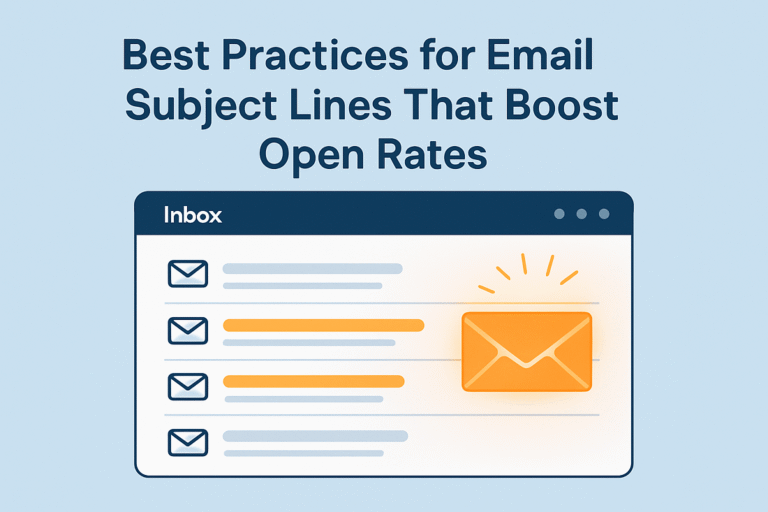
Step 1: Start with a Strong Subject Line
Your subject line determines whether your email is opened.
- Keep it short and actionable (6–10 words).
- Personalize when possible (e.g., using the subscriber’s name or interests).
- Spark curiosity or urgency without being clickbait.
Example:
- “Your free marketing checklist is ready ✅”
- “3 ways to double your email ROI this week”
Step 2: Craft an Engaging Preheader
The preheader is the snippet text that appears next to the subject line.
- Complement your subject line.
- Give a reason to open.
- Keep it 35–50 characters for mobile optimization.
Example:
- “Learn the proven steps top marketers use”
- “Don’t miss out on this week’s tips”
Step 3: Write a Clear and Personal Introduction
Start by addressing the reader and connecting to their pain point or interest.
- Use “you” and “your” language.
- Show empathy or relevance.
Example:
“Hi Alex, struggling to get your emails noticed? You’re not alone — most marketers see open rates under 20%.”
Step 4: Focus on Benefits, Not Features
People don’t buy features — they buy results and solutions.
Example:
- Feature: “Our tool sends automated emails.”
- Benefit: “Save 3 hours every day while sending personalized emails that convert.”
Step 5: Use a Clear Call-to-Action (CTA)
Every email should have one main action.
- Use action-oriented words: “Download,” “Claim,” “Start.”
- Make it stand out visually.
- Place CTAs above the fold and at the bottom.
Example CTA:
- “Claim Your Free Marketing Checklist Now”
- “Start Your 7-Day Free Trial”
Step 6: Keep It Concise and Scannable
- Use short paragraphs (2–3 lines max).
- Use bullet points or numbered lists.
- Highlight important words with bold or italics.
Step 7: Add Social Proof and Trust Signals
- Testimonials, case studies, or user stats increase credibility.
- Example: “Join 10,000+ marketers who use this strategy to increase open rates by 30%.”
Step 8: Test, Analyze, and Optimize
- Test subject lines, CTAs, and sending times.
- Track open rate, CTR, and conversions.
- Use A/B testing to improve continuously.
Common Mistakes to Avoid
❌ Writing for yourself instead of the reader.
❌ Overloading emails with too much content.
❌ Forgetting mobile optimization.
❌ Not including a single clear CTA.
Final Thoughts
Writing emails that convert isn’t about luck — it’s about strategy, clarity, and empathy.
Start with strong subject lines, focus on benefits, and always include a clear CTA. Then, test and refine. The result: emails that engage, inspire, and drive action.