How to Segment Your Email List for Maximum Results
Email marketing success isn’t just about sending more emails — it’s about sending the right emails to the right people.
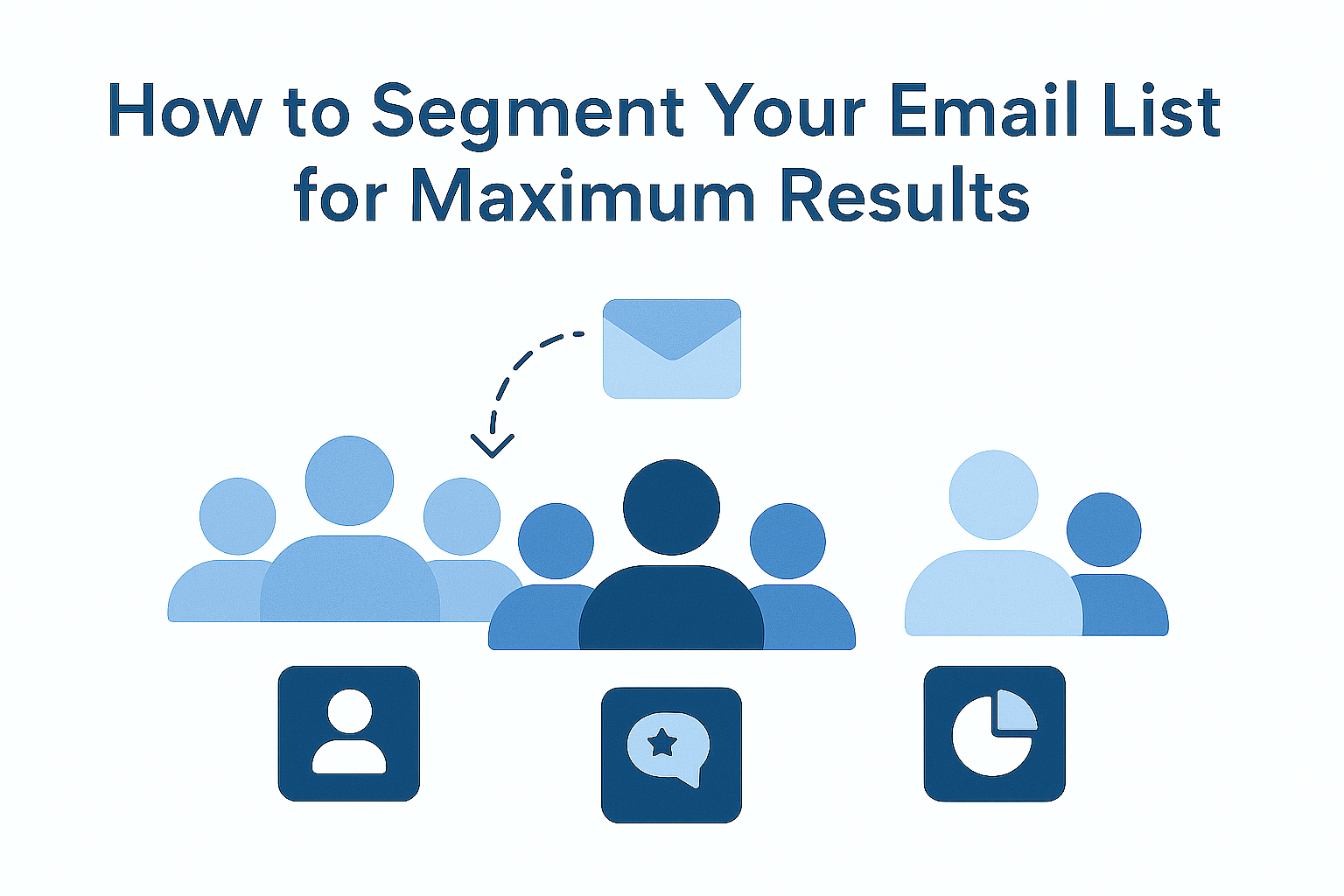
Segmentation allows you to divide your subscribers into targeted groups based on behavior, preferences, and demographics. In 2025, list segmentation is more critical than ever for driving:
- Higher open rates
- Increased click-through rates
- Better conversions and ROI
In this guide, you’ll learn how to segment your email list effectively to get maximum results.
Why Email List Segmentation Matters
- Sends relevant content to each subscriber
- Reduces unsubscribes and spam complaints
- Improves overall engagement metrics
- Boosts conversions by targeting the right audience with the right message
Stat: Marketers who segment their lists see open rates increase by up to 14.31% and click rates by 100.95%.
Types of Email Segmentation
1. Demographic Segmentation
- Based on: age, gender, location, job title, or company size
- Example: “Sending product updates tailored to subscribers in the US vs Europe”
2. Behavioral Segmentation
- Based on: past purchases, clicks, opens, downloads, or website activity
- Example: “Re-engaging subscribers who clicked but didn’t convert”
3. Engagement-Based Segmentation
- Separate highly engaged vs inactive subscribers
- Send re-engagement campaigns to inactive users
- Reward or upsell highly engaged users
4. Psychographic Segmentation
- Based on: interests, values, lifestyle, or preferences
- Example: “Marketing content tailored for eco-conscious subscribers”
5. Lifecycle Stage Segmentation
- New subscribers, leads, first-time buyers, repeat customers
- Example: “Send welcome sequence to new subscribers, special offers to loyal customers”
Steps to Segment Your Email List Effectively
Step 1: Collect the Right Data
- Use signup forms, surveys, and website analytics
- Focus on behavioral and preference-based data for relevance
Step 2: Choose Segmentation Criteria
- Identify the most impactful criteria for your goals (e.g., purchases, engagement, demographics)
Step 3: Implement Segmentation in Your Email Tool
- Most tools like Mailchimp, Klaviyo, ActiveCampaign, or ConvertKit support advanced segmentation
- Create dynamic segments that update automatically based on subscriber behavior
Step 4: Craft Targeted Campaigns
- Write emails that speak directly to each segment
- Personalize subject lines, offers, and content
Step 5: Test and Optimize
- Monitor open rates, CTR, conversions, and unsubscribe rates per segment
- Adjust segmentation strategy based on performance data
Best Practices for Email Segmentation
- Start small — don’t overcomplicate segments initially
- Use dynamic segmentation to automatically update groups
- Combine multiple criteria for highly targeted segments
- Continuously clean your list to remove inactive or bounced emails
- Respect privacy and comply with GDPR/CCPA
Final Thoughts
Segmentation is the key to personalized, high-performing email campaigns. In 2025, sending generic emails is a waste of resources.
By dividing your list strategically, you can:
- Increase engagement and conversions
- Reduce unsubscribes and complaints
- Deliver content your subscribers actually want to see
💡 Start with a few high-impact segments, monitor performance, and scale your strategy over time for maximum results.