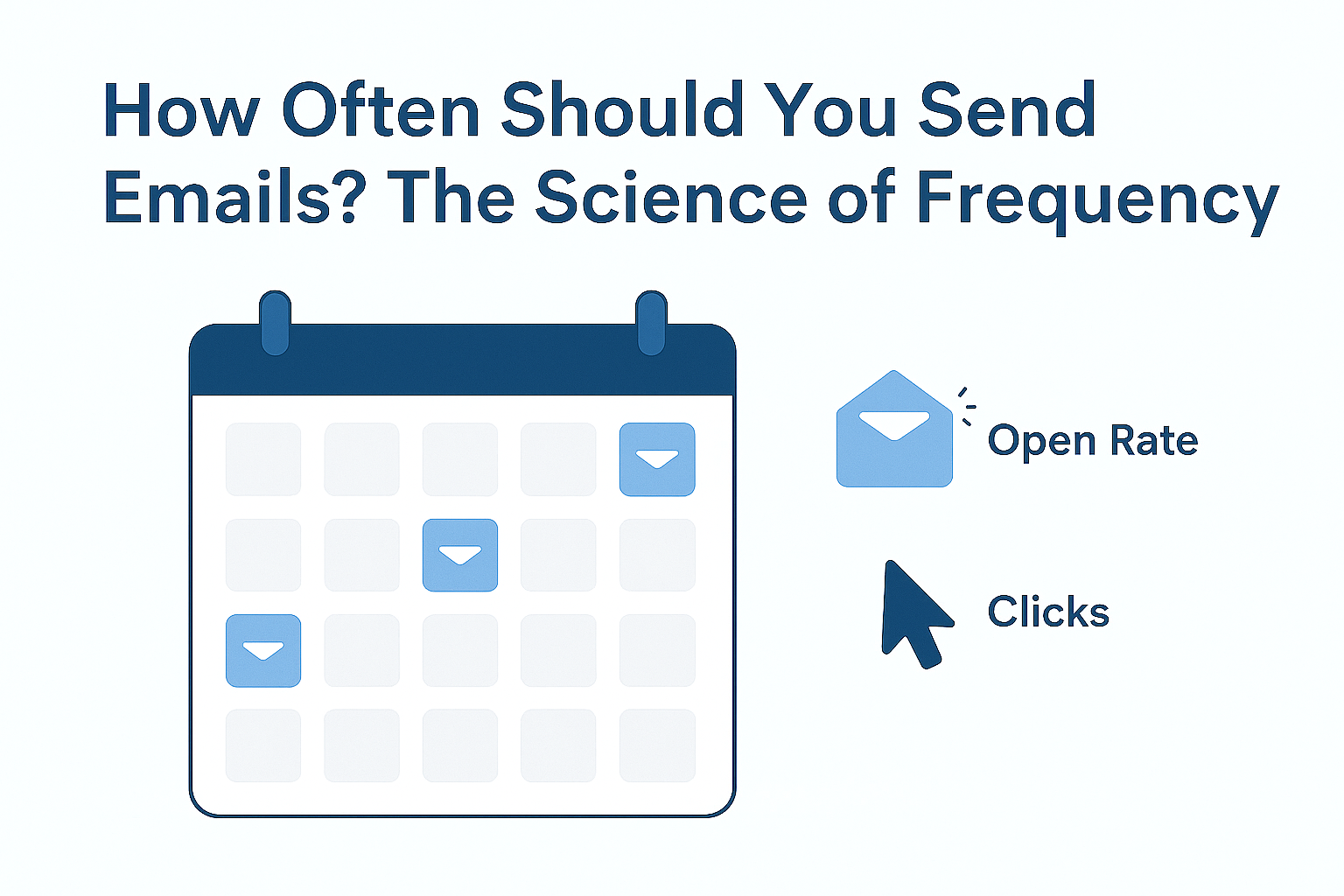
How Often Should You Send Emails? The Science of Frequency
Too many emails = unsubscribes. Too few emails = missed opportunities.
Finding the right email frequency is crucial for maintaining engagement, increasing open rates, and driving conversions. In 2025, with smarter inbox filters and subscriber fatigue on the rise, understanding the science of email frequency has never been more important.
In this guide, we’ll explore how often to send emails, backed by data and best practices.
Why Email Frequency Matters
Email frequency impacts:
- Open rates → Too many emails can overwhelm; too few can reduce recall
- Click-through rates → Consistency keeps your audience engaged
- Subscriber retention → Avoid fatigue that leads to unsubscribes
- Revenue → Sending at the right intervals increases conversions
The Science of Email Frequency
1. Daily Emails
- Pros: High engagement for time-sensitive offers, newsletters, or flash sales
- Cons: High risk of unsubscribes if content isn’t extremely valuable
Best For: Retail promotions, daily tips, high-value content
2. Weekly Emails
- Pros: Keeps audience engaged without overwhelming inboxes
- Cons: Requires consistent, high-quality content
- Opens and CTR tend to be strongest with weekly emails according to benchmarks
Best For: Blogs, curated content, updates, newsletters
3. Biweekly or Monthly Emails
- Pros: Less risk of fatigue, easier to plan
- Cons: Lower recall, slower engagement growth
- Works for long-form content or product updates
Best For: Startups or businesses with limited content resources
Factors That Affect Optimal Frequency
- Audience Preferences → Survey subscribers to find their ideal frequency
- Industry Norms → Retail may require daily emails, B2B may perform better with weekly updates
- Email Type → Promotional, transactional, or educational content may have different ideal frequencies
- Engagement Metrics → Track open rates, CTR, unsubscribes, and conversions
Tips to Determine Your Ideal Email Frequency
1. Segment Your List
- Separate highly engaged subscribers from low-engagement ones
- Send frequent emails to engaged segments and fewer to others
2. Test and Iterate
- A/B test sending schedules (e.g., weekly vs. biweekly)
- Track metrics over 4–8 weeks to determine the sweet spot
3. Respect Subscriber Preferences
- Include options in signup forms for email frequency preferences
- Use surveys or polls to gather feedback
4. Combine Frequency With Quality
- Frequency alone isn’t enough — every email must provide value
- Consistency + value = long-term engagement
Common Mistakes to Avoid
❌ Sending too often without valuable content
❌ Ignoring engagement metrics
❌ Applying a “one-size-fits-all” frequency
❌ Neglecting segmentation based on subscriber behavior
Final Thoughts
There’s no universal “perfect” frequency, but by understanding your audience, testing schedules, and monitoring engagement metrics, you can maximize open rates, clicks, and conversions.
💡 Start with weekly emails, monitor engagement, and adjust gradually. Consistency + value is the winning formula in 2025.