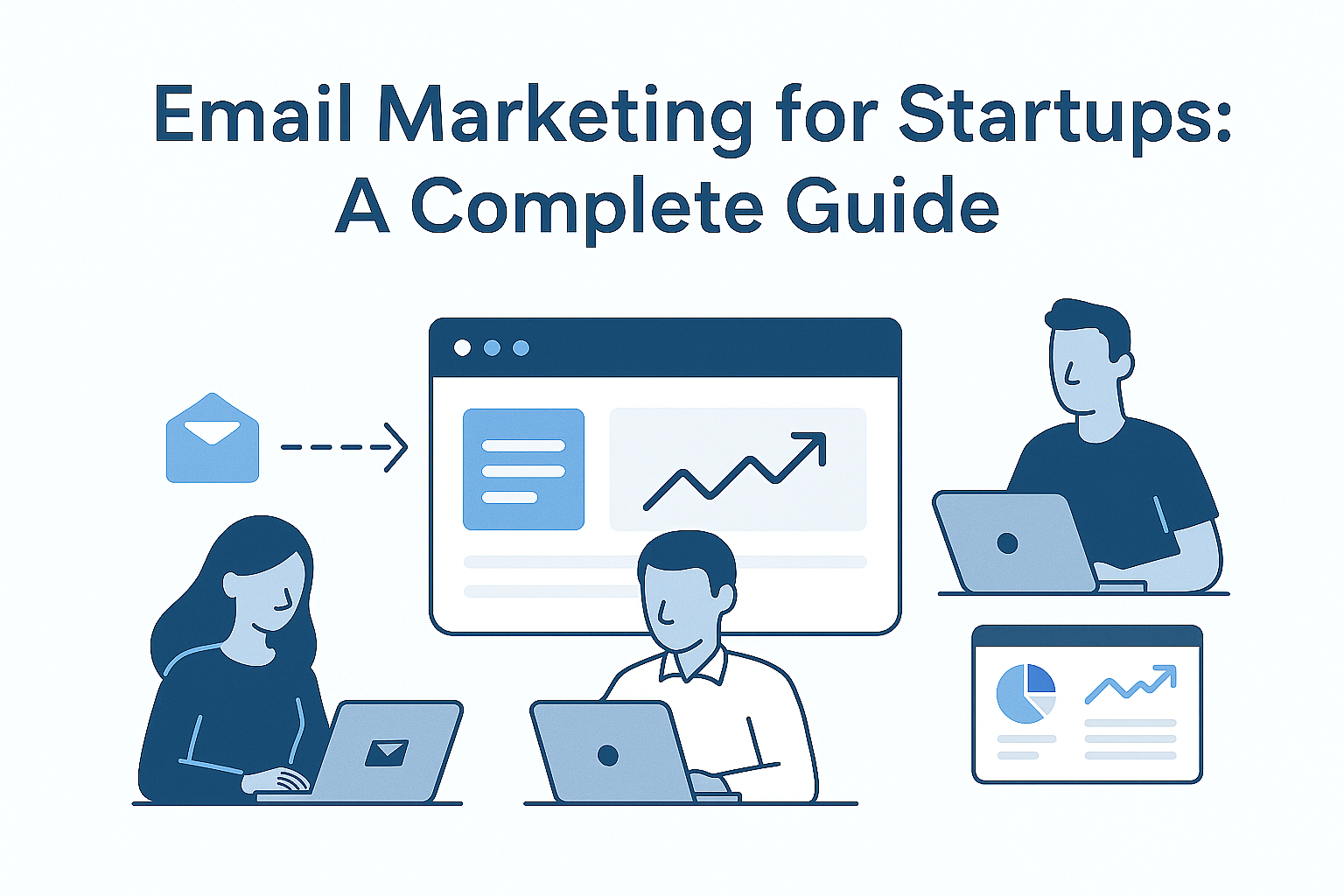
Email Marketing for Startups: A Complete Guide
Email marketing remains one of the highest ROI channels for startups. A well-executed email strategy can help you:
- Build an audience from scratch
- Nurture leads and convert them into paying customers
- Drive repeat business and retention
In 2025, with increasing competition and evolving tools, startups need a strategic approach to email marketing. This guide covers everything from building a list to automating campaigns and measuring success.
Step 1: Build Your Email List
Startups need subscribers who are genuinely interested in your product or service.
- Use lead magnets: free resources, guides, or templates
- Create landing pages and optimized signup forms
- Promote signups via social media, blog content, and webinars
💡 Pro Tip: Avoid buying email lists — they hurt deliverability and engagement.
Step 2: Segment Your Audience
Segmentation allows for personalized, relevant emails. Consider segmenting by:
- Behavior (downloads, purchases, clicks)
- Demographics (location, job role, company size)
- Engagement level (new vs. long-term subscribers)
Segmented campaigns see higher open and click-through rates than generic blasts.
Step 3: Choose the Right Email Marketing Tools
Startups need tools that are affordable, scalable, and easy to use:
- MailerLite → simple, beginner-friendly automation
- ConvertKit → creator-focused email marketing
- ActiveCampaign → advanced automation and segmentation
- Klaviyo → ideal for eCommerce startups
Step 4: Craft High-Converting Emails
Key components:
- Subject Line: Short, curiosity-driven, personalized
- Preheader Text: Tease the content in the email
- Body Content: Focus on value, benefits, and solutions
- CTA: Clear, single action per email
💡 Keep emails concise and mobile-friendly. Most subscribers open emails on smartphones.
Step 5: Implement Automation
Automation saves time and increases engagement. Common startup email automations:
- Welcome Sequence: Introduce your brand and deliver lead magnets
- Cart Abandonment Emails: Recover lost sales
- Nurture Sequences: Educate leads about your product
- Re-Engagement Emails: Reconnect with inactive subscribers
Step 6: Test and Optimize
- A/B test subject lines, CTAs, and email copy
- Monitor key metrics: open rate, CTR, conversion rate, unsubscribes
- Continuously refine campaigns based on data
Step 7: Avoid Common Mistakes
❌ Sending emails too frequently or inconsistently
❌ Ignoring personalization and segmentation
❌ Using purchased or unverified email lists
❌ Failing to track performance
Final Thoughts
Email marketing is essential for startup growth in 2025. By building a quality list, segmenting intelligently, automating workflows, and testing consistently, startups can:
- Build strong relationships with subscribers
- Drive conversions and revenue
- Scale efficiently without overspending
💡 Start small, iterate fast, and leverage tools that grow with your business.