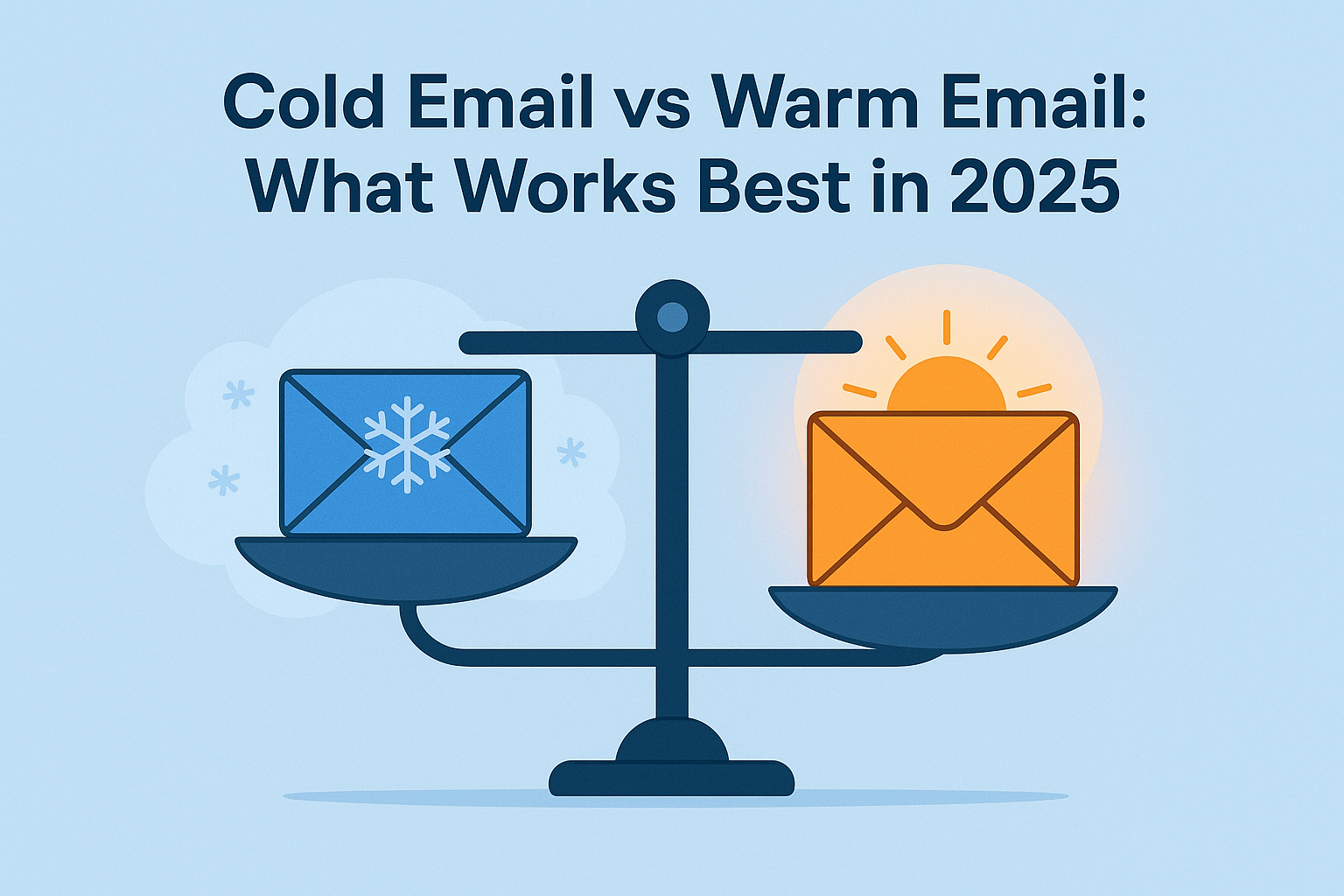
Cold Email vs Warm Email: What Works Best in 2025?
Email marketing is evolving fast, but one debate continues to dominate: cold email vs warm email.
Both strategies can drive leads and sales — but their success depends on timing, personalization, and the relationship you have with your audience.
In 2025, with AI-driven personalization and tighter spam regulations, the rules of the game have changed. So, which approach should you focus on? Let’s break it down.
What is a Cold Email?
A cold email is when you reach out to someone who has no prior relationship with you. It’s like a digital cold call, but less intrusive.
Key traits of cold emails:
- Sent to prospects who don’t know you.
- Goal: Generate leads, partnerships, or sales.
- Works best for B2B outreach.
Example:
“Hi John, I noticed your company is scaling in SaaS. We help startups reduce churn by 20%. Would you like a free demo?”
What is a Warm Email?
A warm email is sent to someone who already knows you — a subscriber, lead, or past customer.
Key traits of warm emails:
- Sent to people who’ve interacted with your brand.
- Goal: Nurture, educate, and convert.
- Works best for long-term relationship building.
Example:
“Hi Sarah, thanks for downloading our free email marketing guide! Here’s a checklist to help you improve open rates.”
Cold Email vs Warm Email: The Key Differences
| Factor | Cold Email | Warm Email |
|---|---|---|
| Audience | No prior connection | Existing connection or interest |
| Goal | Lead generation, partnerships | Nurturing, conversions, retention |
| Response Rate | Low (1–5%) | Higher (20–40%) |
| Personalization | Critical for success | Easier with known subscriber data |
| Risk | Spam complaints, low deliverability | Lower risk, more trust |
| Best For | B2B sales, outreach campaigns | Newsletters, product updates, offers |
The State of Cold Email in 2025
Cold email isn’t dead — but it’s evolving:
- AI personalization makes outreach smarter (customized intros, subject lines).
- Email warm-up tools prevent deliverability issues.
- Regulations (GDPR, CAN-SPAM, DMA rules) are stricter than ever.
👉 Cold email works best when highly targeted and used with a multi-touch strategy (LinkedIn + email + calls).
The State of Warm Email in 2025
Warm emails remain the backbone of email marketing.
- Subscribers expect value-driven content (not just sales).
- AI helps segment and deliver dynamic content at scale.
- Average ROI is 4,200%, making it the most profitable channel.
👉 Warm emails are ideal for building long-term customer relationships.
Which Works Best in 2025?
- For B2B lead generation → Cold emails still matter if done with personalization and compliance.
- For brand growth & retention → Warm emails win, thanks to trust and engagement.
💡 The smartest marketers use both:
- Cold email → to start conversations.
- Warm email → to nurture and close deals.
Best Practices
Cold Emails
- Research your prospects (LinkedIn, Crunchbase).
- Personalize beyond {First Name}.
- Keep it short & value-driven.
- Use email warm-up to protect domain reputation.
Warm Emails
- Segment your list.
- Deliver consistent value (guides, case studies, discounts).
- Use strong CTAs.
- Automate sequences with tools like ActiveCampaign, Klaviyo, or ConvertKit.
Final Thoughts
The cold email vs warm email debate isn’t about choosing one over the other. In 2025, the best strategy is a hybrid approach:
- Use cold emails to generate new opportunities.
- Use warm emails to nurture, convert, and retain customers.
👉 Cold opens the door. Warm builds the relationship. Together, they maximize ROI.